
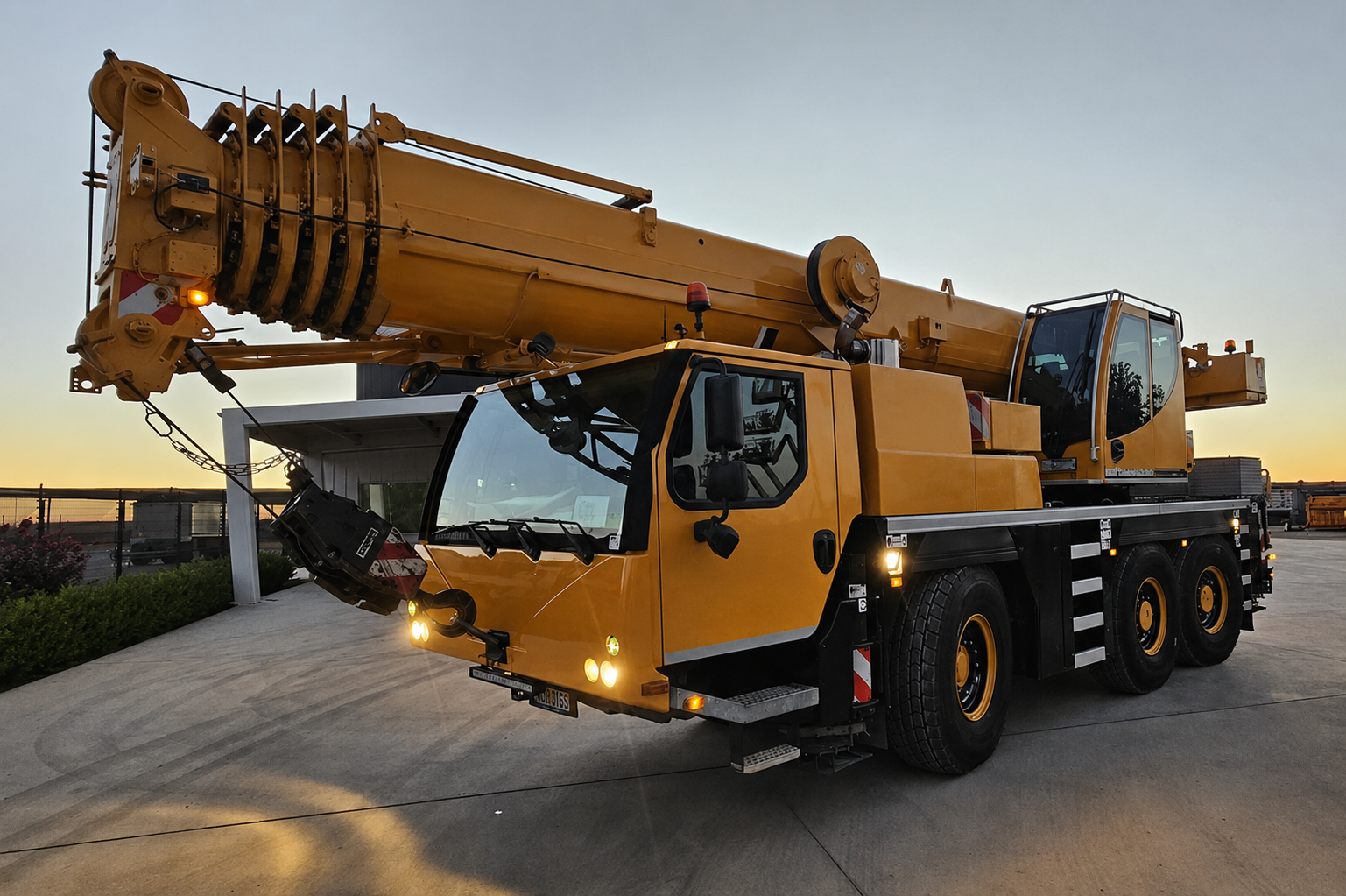
Financing a Crane: What Makes It Different
A crane isn't like financing a ute or excavator. The loan amount is substantially higher, the equipment holds its value differently, and lenders assess the risk based on how specialised the machinery is. Most crane finance sits between $150,000 and $800,000, depending on whether you're looking at a mobile crane, tower crane, or all-terrain model.
The structure you choose affects your cashflow from day one. A chattel mortgage with a balloon payment might drop your monthly repayments by 30% compared to a standard loan, but you'll need to refinance or sell the crane at the end of the term to cover that final lump sum. A hire purchase agreement spreads the cost evenly but means you don't own the crane until the last payment clears.
Consider a contractor who needs a 25-tonne mobile crane for a two-year infrastructure project. They finance $400,000 through a chattel mortgage with a 30% balloon payment over five years. Fixed monthly repayments sit around $5,800, compared to $8,200 without the balloon. At the end of year two, the project wraps up and they sell the crane for $320,000. That sale clears the balloon payment of $120,000, leaves them with $200,000 in equity, and they've claimed depreciation and interest as tax deductions throughout.
Chattel Mortgage vs Hire Purchase for Cranes
A chattel mortgage suits businesses that want to own the crane immediately and claim the GST upfront. You take ownership from day one, claim the full GST back in your next Business Activity Statement, and depreciate the crane according to the Australian Taxation Office's effective life tables. Interest and depreciation both reduce your taxable income.
Hire purchase keeps the lender as the legal owner until you make the final payment. You can't claim the GST upfront, but it's built into each repayment. This structure works for contractors who want certainty without managing a balloon payment or refinancing at the end of the term. Monthly repayments are slightly higher because there's no residual, but you own the crane outright once the term finishes.
The decision comes down to cashflow and tax planning. If your business has strong revenue and you want to preserve working capital while maximising deductions, a chattel mortgage with a balloon payment usually delivers better short-term cashflow. If you prefer predictable repayments and full ownership at the end without refinancing, hire purchase makes more sense.
Ready to get started?
Book a chat with a Finance Broker at DriveHome Finance today.
What Lenders Look at When Assessing Crane Finance
Lenders assess crane finance differently to standard commercial vehicle finance. They'll review your business financials, including profit and loss statements, Business Activity Statements, and how long you've been operating. Most lenders want to see at least two years of trading history, though some specialist lenders will consider newer businesses if you have contracts in place or a strong deposit.
The crane itself acts as collateral. Lenders prefer brands with strong resale value like Liebherr, Tadano, or Manitowoc because they're easier to sell if the loan defaults. A niche or older model might require a larger deposit or attract a higher interest rate because the lender's risk increases if they need to recover the asset.
Your deposit size matters. A 20% deposit typically unlocks better interest rates and more flexible terms. Some lenders will finance up to 100% of the crane's value if your financials are strong, but expect higher repayments and stricter conditions.
Balloon Payments and How They Affect Your Cashflow
A balloon payment defers part of the loan amount to the end of the term, reducing your fixed monthly repayments during the life of the lease. The balloon is usually set between 20% and 40% of the loan amount, depending on the lender and the crane's expected residual value.
The benefit is immediate cashflow relief. Lower monthly repayments mean more capital available for wages, materials, or other equipment finance needs. The risk is that you'll need to refinance, sell the crane, or pay the balloon in full when the term ends. If the crane's market value drops below the balloon amount, you'll need to cover the shortfall.
In a scenario where a business finances a $500,000 crane with a 35% balloon over five years, monthly repayments might sit around $7,200. At the end of the term, the balloon payment is $175,000. If the crane sells for $200,000, they clear the balloon and walk away with $25,000. If it only sells for $150,000, they need to find $25,000 to close out the loan. Planning for that outcome at the start avoids cashflow problems later.
Fixed vs Variable Interest Rates for Construction Equipment
Fixed rates lock in your repayments for the life of the loan, which makes budgeting predictable. If rates rise during your term, you're protected. If they fall, you're locked in and can't take advantage without refinancing and potentially paying break costs.
Variable rates move with the market. Your repayments can increase or decrease depending on what lenders are charging at the time. Most variable asset finance agreements allow extra repayments without penalties, which can reduce the loan term and total interest paid.
For cranes, fixed rates are more common because the loan amounts are substantial and businesses want certainty. A 1% rate increase on a $400,000 loan adds roughly $330 to monthly repayments, which adds up over five years. Locking in a rate at the start removes that variable from your cashflow planning.
When Vendor Finance Makes Sense
Some crane dealers offer vendor finance, which means the dealer arranges the loan directly rather than going through a bank or external lender. The application process is often faster, and approval criteria can be more flexible, particularly for businesses with limited trading history.
The trade-off is that interest rates are typically higher than what you'd get through a broker who compares offers across multiple lenders. Vendor finance works when speed matters more than cost, or when your business doesn't meet the criteria for traditional commercial equipment finance.
Before accepting vendor finance, get a comparison. A broker can access offers from banks and specialist lenders across Australia and often secure better terms, even if your financials aren't perfect. Paying an extra 2% on a $300,000 loan costs you around $30,000 over five years, which is worth a few extra days of paperwork.
Depreciation and Tax Benefits for Crane Purchases
Cranes are treated as capital equipment, which means you can claim depreciation over the asset's effective life. The Australian Taxation Office sets the effective life for cranes at around 10 to 15 years, depending on the type. You can use either the prime cost method or diminishing value method to calculate your deduction each year.
If you purchase the crane under a chattel mortgage, you can also claim the interest component of each repayment as a tax deduction. These deductions reduce your taxable income, which improves your cashflow indirectly by lowering your tax bill.
Instant asset write-off rules have changed over the years, so check the current threshold with your accountant. In the past, businesses could instantly deduct the full cost of equipment purchases under a certain value, but cranes typically exceed those limits. Depreciation remains the primary tax benefit for most crane purchases.
Preserving Working Capital When Buying Specialised Machinery
Buying a crane outright ties up capital that could be used for wages, materials, or other business needs. Financing the purchase spreads the cost over several years, which keeps your working capital available for day-to-day operations and unexpected expenses.
For contractors managing multiple projects, preserving capital means you can take on additional work without waiting to rebuild cash reserves. It also reduces the risk of cashflow problems if a client delays payment or a project overruns.
Financing costs money in interest, but the trade-off is liquidity. If your business generates a return higher than the interest rate on the loan, financing makes financial sense. If you're earning 15% on projects and paying 8% on the loan, the 7% difference justifies keeping your capital in the business rather than locking it into the crane.
Call one of our team or book an appointment at a time that works for you. We'll compare asset finance options from lenders across Australia and structure a solution that fits your business needs.